
The best time to visit Botswana for safari is the dry season, running May through October. Rain stops almost completely by May. Rivers and pans shrink fast after that. Animals crowd around what water remains. June through August brings the clearest skies and the coolest mornings. Photos come out sharp in this light. Morning drives in June and July can start near freezing. By noon, the desert can hit the seventies. July and August are the busiest months on the calendar. Camps fill up early most years.
Rates climb to match the demand. September and October push temperatures even higher. Water sources keep shrinking anyway. Wildlife ends up with fewer places left to hide. Want fewer crowds and lower prices instead? Shift toward April, May, or November. You trade some wildlife density for a lot more room to breathe.
Botswana Safari Seasons Explained: Dry vs. Green
Botswana runs on two working seasons, not four. The dry season lasts from May through October. The green season covers November through April. Everything you feel on a game drive traces back to which side of that line you land on.
Rain is not really the difference that matters here. Clear sightlines are the real difference. During the green season, grass grows tall and bush thickens fast. An elephant fifty feet away can hide behind a single stand of mopane trees. Predators use that cover too. Lions and leopards get much harder to spot, even with a sharp guide beside you.
Dry season strips that cover away. Grass dies back, leaves drop, and hiding spots disappear one by one. By August, a single waterhole can pull in elephants, buffalo, and impala within the same ten minutes. There is nowhere else nearby to drink. That crowding at the water is the entire dry-season pitch in one sentence.
Green season trades that density for a different kind of show. Antelope give birth between November and January. Predators follow the easy meals that come with it. Migratory birds arrive in full breeding color. Storms roll in most afternoons. They clear by evening, and that combination makes for some of the best light on the entire continent.
Neither season gets it wrong on its own. The mistake is booking dry-season dates and expecting green-season birds, or the other way around.
| Season | Months | Weather | Best for |
| Dry | May–Oct | Clear skies, cold mornings, hot days | Wildlife density, photography |
| Green | Nov–Apr | Afternoon storms, fast plant growth | Birding, calving, lower rates |
Month-by-Month Guide to a Botswana Safari
Pick your month, not just your season. Nobody actually takes six months off work. Most people have one specific week to work with. Here is what that week looks like, month by month, across the entire Botswana calendar.
January
January is not the easiest month for sightings. Rain falls hard and grass grows tall fast, so animals scatter and hide in thick cover. The upside still feels dramatic. Storm clouds build over the plains most afternoons, and the light before and after them turns gold. Newborn wildebeest and impala start showing up on the Kalahari plains. Bring a rain jacket and lower your expectations for lion sightings this month.
February
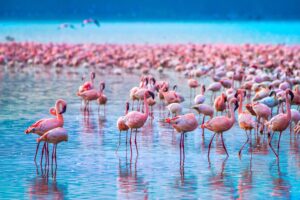
February belongs to the birds. Migrant species arrive in full breeding plumage. The Makgadikgadi and Central Kalahari fill with color most visitors never see. Zebra herds are already moving into the pans by this point, drawn by fresh grass after the rains. Game viewing away from the pans stays patchy, since thick bush still hides most large mammals. Pack binoculars over a long lens if birds are the goal.
March
March feels like a hinge between two different trips. Rain still falls, but less often than January or February. The crowds from the coming dry season have not arrived yet. Elephants start moving back toward the Okavango Delta as the floodwaters build. Grass stays thick enough to slow down predator sightings, though patient guides still find them. Prices sit near their lowest point of the year in March.
April
Impala rut through most of April, and the noise alone is worth the visit. Males clash antlers in open clearings during the middle of the day. Most other game-drive behavior happens only at dawn. Rain tapers off fast this month. The bush starts to thin out too. Floodwaters keep rising in the Okavango Delta as water arrives from Angola. Botswana sits in a real in-between moment here, caught between green season color and dry season visibility.
May
May might be the best value month on the entire Botswana calendar. Dry season begins in earnest. Grass thins fast, and animals start gathering at fewer water points. Peak-season crowds and peak-season prices have not shown up yet. Mornings turn crisp for the first time since last winter. Elephant herds return to the Chobe and Linyanti river systems in growing numbers. Book May if you want July’s wildlife without July’s price tag or July’s traffic on the roads.
June
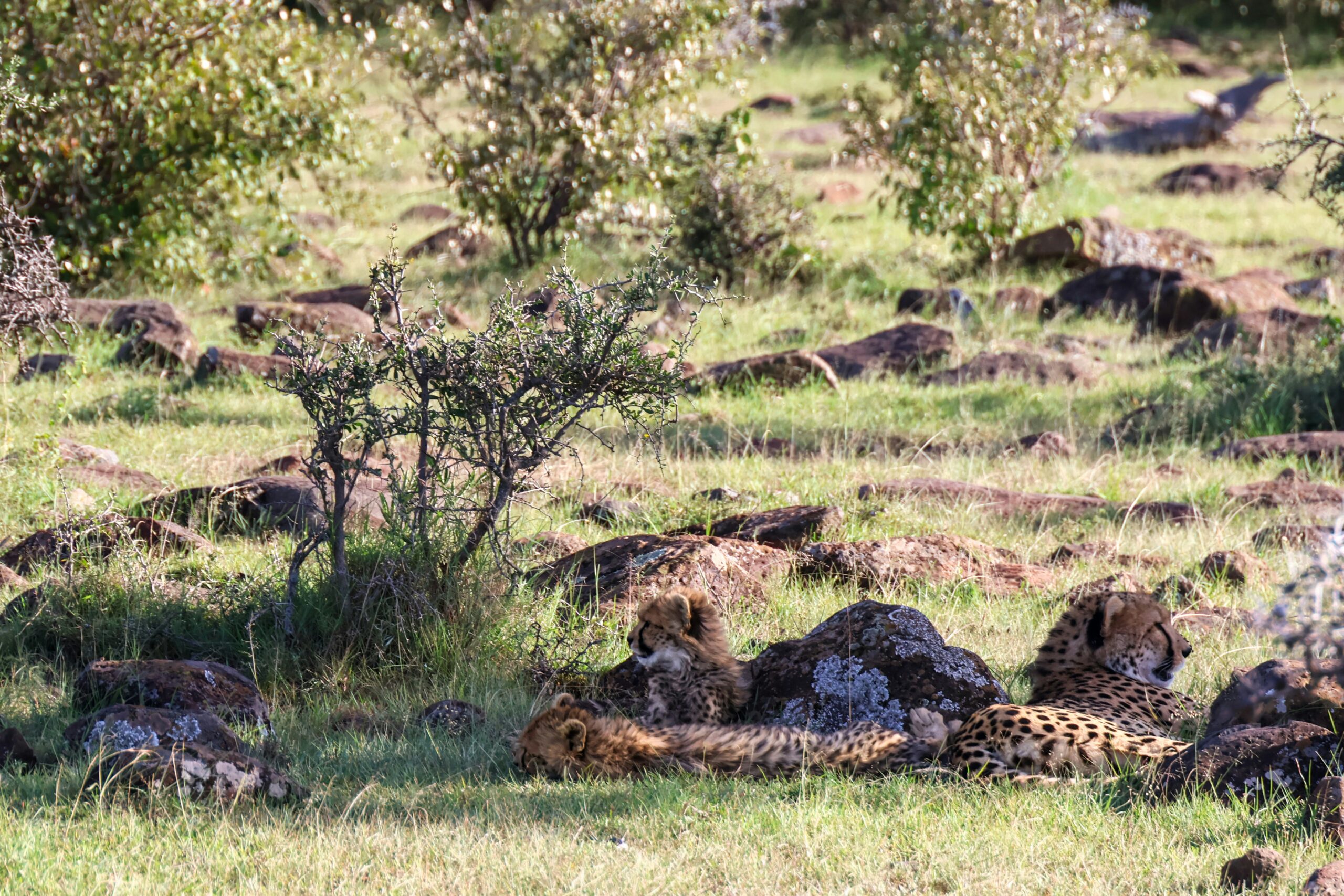
Wild dog pups start emerging from their dens in June. Few Botswana sightings beat a den full of pups tumbling over each other at sunrise. Peak season begins around the same time. Mornings turn properly cold, sometimes near freezing in the Kalahari, so bring more than one warm layer. Water levels in the Okavango Delta keep climbing toward their highest point of the year. Camps start filling up fast from this point through October.
July
Most guides call July the single best month to visit Botswana. The wildlife numbers back that claim up. Grass is at its thinnest, and water is scarce outside the permanent channels. Predator action stays high around what water remains. What that same advice skips is the cost of all that certainty. Camps book out months in advance. Roads carry more vehicles too. Rates climb to their highest point of the year. July delivers near-guaranteed sightings, and it delivers company while you watch them.
Peak months book out early most years. If July or August is calling you, WhatsApp us or email us. We can start checking camps and dates before the calendar fills up.
August
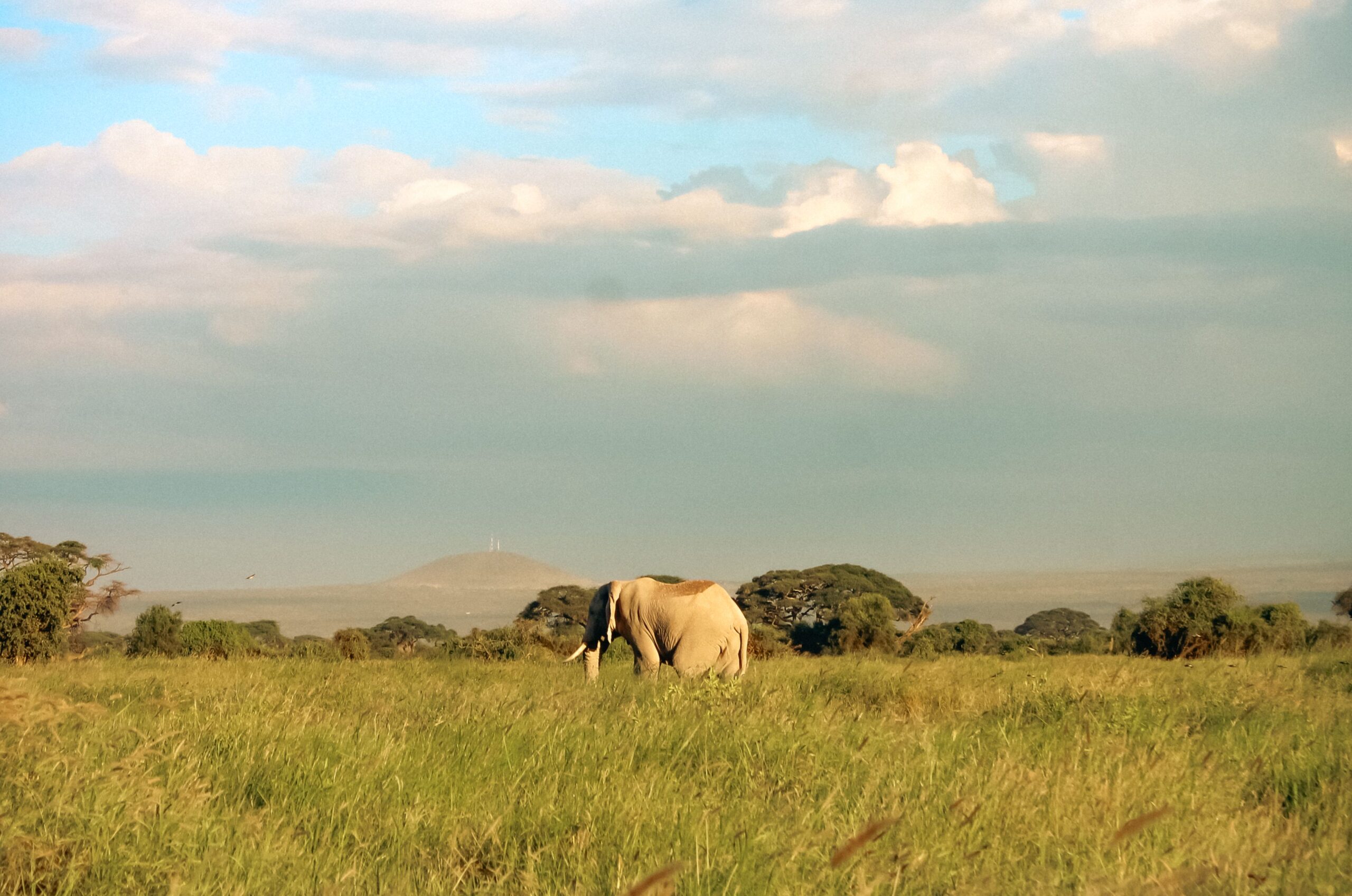
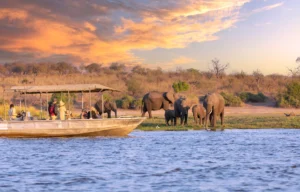
Elephants pack into Chobe National Park by the thousands in August. A single river becomes the only reliable water source for miles around. Skies stay clear and dry through the entire month. Nights are still cold, but afternoons warm up fast under a bright winter sun. Mokoro trips run at their best through the flooded channels of the Delta. August ranks with July as the busiest, priciest stretch of the entire year.
September
September trades July’s chill for real heat, and the difference shows fast. Days climb well past ninety degrees in parts of the Kalahari. Grass and leaves have thinned to almost nothing by now, so visibility stays excellent even as comfort drops. Water sources keep shrinking, which concentrates predators and prey around the same handful of points. Crowds thin out slightly compared to July and August, since school holidays have ended back home.
October
October is not a comfortable month, and nobody who has visited will tell you otherwise. Temperatures peak higher than any other month on the calendar, often past one hundred degrees by afternoon. What that heat buys you is density. Nearly every animal in the region depends on the last few remaining water sources. Sightings stack up fast around them. Big cat encounters run especially strong through October, right before the rains finally break.
November
November splits into two different trips depending on when you land. Early November still plays like dry season, hot and dusty with thinning crowds and lower rates. Late November flips fast once the first real storms arrive, and green season begins in earnest. Zebra herds start pushing into the Makgadikgadi Pans as fresh grass returns. Ask about specific dates before booking November. The difference between week one and week four can be real.
December
December is Botswana’s true off-season, and that is not a knock against it. Rain falls most afternoons, and the bush turns fully green within weeks. Calving season continues from November, so predators stay active around newborn antelope. Crowds and prices both drop to their lowest point of the year. Book December if solitude matters more to you than a guaranteed lion sighting.
Why the Okavango Delta Floods During the Dry Season
The wettest-looking scenery in Botswana shows up during the driest months on the calendar. That sounds backward, and it is worth explaining properly. It changes how you should plan a mokoro trip.
The rain that floods the Okavango Delta does not fall in Botswana at all. It falls hundreds of miles away, in the highlands of Angola. That rain arrives months before Botswana sees a single flooded channel. The water takes four to five months to travel south through rivers and floodplains. By the time it reaches the Delta, Botswana’s own rainy season has already ended.
So the flood peaks land squarely inside the dry season, roughly June through August in the northern Delta. Camps in the southeastern part of the Delta see the water later. It sometimes does not arrive until September or October, since it has further to travel before reaching them. Ask which part of the Delta a camp sits in before booking a mokoro-heavy itinerary. A camp on the northern edge floods early. A camp further south floods later, even in the exact same year.
Once you understand where the water is actually coming from, the whole calendar stops feeling confusing.
What Wildlife Peaks When: A Season-by-Season Sighting Calendar
Weather tells you when to go. Wildlife shows you why it matters. Most travelers do not actually want good game viewing in the abstract. They want one specific animal doing one specific thing. The table below covers the moments that matter most. Why does timing matter this much? Miss a denning season by a single month, and you get adult wild dogs instead of pups. There is no more tumbling around a den entrance. That still counts as a good sighting. It is just not the same sighting.
| Species / behavior | Peak window | Where |
| Wild dog pups at the den | June–August | Linyanti, Moremi |
| Impala rut (males clashing) | April | Okavango Delta, Chobe |
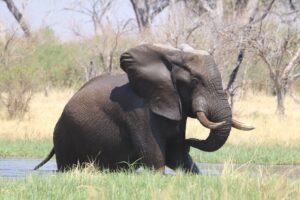
| Elephant concentration at rivers | August–October | Chobe National Park |
| Newborn antelope (calving) | November–January | Central Kalahari, Makgadikgadi |
| Zebra migration into the pans | November onward | Makgadikgadi, Nxai Pan |
| Migratory birds in breeding color | November–March | Okavango Delta, Kalahari |
| Predator-prey action at waterholes | September–October | Savuti, Chobe |
Circle whichever row matters most to you first. Build the rest of your trip around it.
Peak, Shoulder, or Green Season: Which One Fits Your Trip?
Peak season buys you certainty. Green season buys you solitude, and shoulder season tries to split the difference between the two.
Peak season, roughly July through September, delivers the highest odds of a strong sighting on any given morning. Water is scarce, animals cluster, and guides know exactly where to look. That certainty comes at a cost beyond the higher rates. A single waterhole sighting might draw four or five other vehicles. All of them angle for the same shot at the same time. Silence on a game drive gets harder to find in peak season.
Shoulder season falls in April, May, and again in November. It trades some of that peak-season certainty for real savings and thinner crowds. Wildlife stays active and visible, just not quite as concentrated as the peak months. Rates drop, availability opens up, and a private vehicle becomes far more likely.
Green season, November through March, flips the whole equation. Wildlife spreads out across a landscape flush with new grass. Sightings take more patience and more skill from your guide. What you get in return is calving season and migrant birds in full color. Dramatic afternoon skies round out the deal, the kind peak-season travelers never see. Rates run at their lowest point of the year.
Which one is right for you? If a guaranteed lion sighting matters more than anything else, book peak season and accept the crowds. If solitude and value matter more, green season fits better instead.
| Peak (Jun–Oct) | Shoulder (Apr–May, Nov) | Green (Nov–Mar) | |
| Crowds | Highest | Moderate | Lowest |
| Rates | Highest | Mid-range | Lowest |
| Wildlife visibility | Highest | Good | Variable |
| Best for | Guaranteed sightings | Value and space | Birds, calving, photos |
Tell us which column sounds like your trip, and we can start building the route around it. WhatsApp us or email us with your rough dates.
What a Botswana Safari Costs by Season
Here is the honest version most guides will not give you. Nobody can hand you a real number without knowing your actual travel dates first. Botswana camp and lodge pricing swings hard by season. It sometimes doubles between the cheapest month and the most expensive one. Peak season, July through September, sits at the top of that range. Almost every camp in the country charges more during those weeks. Green season, especially December through March, sits at the bottom. Real, published discounts show up here, not just vague seasonal talk. Shoulder season lands somewhere in between. It sits closer to green season pricing, but dry season visibility stays mostly intact.
What actually drives the number is not the season alone. It is the combination of season, camp location, and how far ahead you book. In 2026, several peak-season camps were already booked solid for the following July. That booking pace hit before the current season even ended. A published rate sheet for July is not the whole story. Availability at the camps you actually want tends to disappear months before the date itself.
| Season | Relative price level | Why |
| Peak (Jul–Sep) | Highest | Maximum demand, best wildlife odds |
| Shoulder (Apr–May, Nov) | Mid-range | Strong visibility, thinner crowds |
| Green (Dec–Mar) | Lowest | Fewer visitors, real published discounts |
This is where working with a specialist earns its keep. We build every Botswana itinerary around your real travel window. We never push a fixed package that may not fit your dates. Send us your rough dates and what you most want to see. We will put together honest numbers with no hidden fees attached. WhatsApp us or email us to get that conversation started.
Packing and Planning Tips by Season
Pack for the mornings, not the afternoons. That single shift in thinking solves most of the packing mistakes first-time Botswana visitors make.
Dry season mornings, especially June and July, can drop close to freezing. A strong winter sun pushes temperatures back up by midday. A single fleece will not cut it at six in the morning on an open game vehicle. Green season brings a different set of problems entirely, built around rain and insects rather than cold.
Dry season packing:
- A proper insulated jacket for early morning drives
- Warm gloves and a hat for June and July mornings
- Layers you can strip off fast as the day heats up
- Sunglasses and strong sunscreen for the sharp midday light
Green season packing:
- A real rain jacket, not just a light shell
- Stronger insect repellent for the wetter months
- Quick-dry clothing that survives an afternoon storm
- A dry bag to protect cameras during sudden downpours
Confirm current malaria guidance with your doctor before you travel. Risk levels shift with the season and with recent outbreak data.
Conclusion
Pick your month first, not your season. A specific window beats a vague plan built around sometime in the dry season. Tie it to one animal or one budget, and the whole trip gets easier to plan. May and June reward travelers chasing value. July and August reward travelers chasing certainty. November and December reward travelers chasing solitude and color. None of these choices is wrong, only different. Once you know which one fits, WhatsApp us or email us. We will build the route around it.