
Botswana is not a budget safari country, and this guide will not pretend otherwise. Space costs money here, and Botswana has more open space than almost anywhere else in Africa. That trade-off shapes this entire list of the best things to do in Botswana. You get elephant herds by the hundreds. You get water so still you can hear a fish break the surface. You get desert nights with no light for a hundred miles. Ten stops make up this guide. Each one comes with a season or a cost worth knowing before you book.
1. Take a Mokoro Canoe Through the Okavango Delta
A mokoro trip is not a boat safari, and mixing the two up wastes a booking. A boat safari runs on an engine. It moves fast along open channels, chasing sightings the way a game drive does on water. A mokoro is a dugout canoe, poled by hand through the reeds. The channels run too narrow and too shallow for anything with a motor. You sit low, almost at water level. A local poler stands at the back of the canoe. The poler pushes it forward with one long pole. That is how it has been done here for generations.
Few things to do in Botswana feel as quiet as this one. There is no engine noise. There is no rush to the next sighting. What you get instead is simple. Water lilies brush the sides of the canoe. A lechwe antelope splashes through the reeds now and then. Long stretches pass with only one sound, the pole dipping into the water. Most lodges build this into a morning or late afternoon slot. It pairs well with a walking safari on one of the Delta’s dry islands. Book it early in your trip rather than the last day. Once you have seen the Delta from a canoe, everything else on this list makes more sense.
2. Watch Elephants From the Water in Chobe National Park
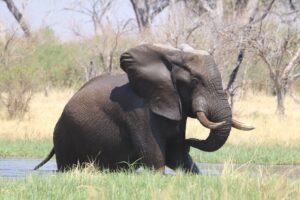
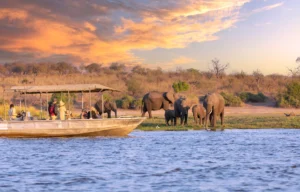
Chobe is the park that rewards a short trip. Most of the destinations on this list punish rushing. You need days in the Kalahari before the silence means anything. You need patience in the Delta too. There, a canoe trip takes time to feel like more than a nice ride. Chobe works in a different way entirely. The Chobe River runs through the park’s northern edge. Elephants come to it every single day. Few other parks in Africa match those numbers. You do not need to search for wildlife here. You need to sit on the riverbank, or better yet, on a boat. Let the animals come to you instead.
A Chobe river cruise in the late afternoon is the single most reliable wildlife encounter in this guide. Herds arrive to drink and bathe as the light turns gold, often close enough to hear them breathing. Morning game drives along the riverfront cover more ground. They turn up predators more often, lions and painted wolves especially. Sightings are never guaranteed there, though, not the way elephant sightings on the river are. Lodges inside the park put you closest to the action. Some run as tented camps rather than fixed buildings. Options in nearby Kasane cost less. They still put you on the river within twenty minutes.
Three things decide how a Chobe visit goes:
- Time of day: late afternoon river cruises for elephants, early morning drives for predators
- Boat versus vehicle: a boat gets you closer to the river’s edge, a vehicle covers more of the park
- How many days: two nights is enough to see the river work, longer trips add the interior parks
3. Stargaze and Track Meerkats in the Kalahari Desert
This stop has nothing to do with big game. That is worth saying plainly before you plan around it. Someone chasing another elephant herd or a lion sighting will leave the Kalahari underwhelmed. Someone chasing real silence will get exactly what they came for. So will anyone chasing a night sky with zero light pollution. The Central Kalahari Game Reserve covers a huge stretch of desert. Outside the dry season, it can feel truly empty. For many travelers, that emptiness is the entire point.
Meerkats are the reason most people add this stop to a Botswana itinerary. Habituated colonies near camps like Jack’s Camp and San Camp have grown used to visitors. Guides can walk you within a few feet of a family standing sentry duty. They perch on a termite mound, watching for danger. It is one of the few wildlife encounters in southern Africa like this. The animals seem curious about you, not alert to a threat.
4. Cross the Makgadikgadi Salt Pans by Quad Bike
The Makgadikgadi Pans are large enough to see from orbit. Driving across them makes that scale feel personal. A guide leads small groups out by quad bike. You ride for miles across pure white salt flat. The horizon never seems to get any closer. Many trips end with dinner and a night spent sleeping under open sky. You sleep in the middle of the pan itself, no tent walls between you and the stars.
There is a genuine budget split here, and most guides skip it. Jack’s Camp, the original luxury property built in this landscape, is the version most travel articles mention first. It is also the most expensive option in this entire guide by a wide margin. Gweta Lodge and Planet Baobab sit in the nearby town of Gweta. Both run quad bike trips onto the same salt pans. The price is a fraction of what Jack’s Camp charges. The salt flat does not know or care which lodge booked your ride.
Pick based on budget, not prestige:
- Splurge: Jack’s Camp, the original pan-side luxury property, best for a once-in-a-trip stay
- Budget: Gweta Lodge or Planet Baobab, same salt pan access at a much lower nightly rate
5. Meet the San People and Learn Their Story
Most travel guides romanticize San culture without naming any way to engage with it. That vagueness does the community no favors. The San have lived in the Kalahari for tens of thousands of years. Their history also includes displacement from parts of their ancestral land, within living memory. A respectful visit needs to be guide-led. It should be arranged directly through the community. It is not a drive-by stop tacked onto a game drive.
Nature walks with trained San trackers teach real tracking skills. Camps like Tau Pan Camp and Nxai Pan Camp offer them. Guides pass down plant knowledge handed over generations. The village of D’kar, near Ghanzi, holds the Kuru Art Project. It shows paintings and prints made by Naro San artists. A small museum next door documents the culture’s history. If your trip lands in August, plan around one event. The Kuru Traditional Dance and Music Festival draws San communities from across the Kalahari. Expect a night of music and fire-lit dance.
6. Fly Over the Okavango Delta on a Scenic Flight
No ground-level activity shows you the actual shape of the Delta, mokoro trips included. From a canoe, you see reeds, water, and whatever wildlife happens to be nearby. From a small plane, or a helicopter with the doors off, the Delta looks different entirely. It becomes a maze of channels and islands. Bands of green and blue stretch to the horizon in every direction. Elephant and buffalo herds show up as dark specks moving across the floodplain below.
Flights leave from Maun’s airport, the hub for most Delta lodges. Operators like Mack Air and Helicopter Horizons run scenic routes. Most last thirty minutes to an hour. Pair this with a Delta lodge stay rather than treating it as a standalone day trip. Landing back at your camp after seeing it from above changes things. The rest of the stay feels different on the ground.
7. Reel In a Tiger Fish on the Okavango Panhandle
Fishing rarely makes a Botswana shortlist, and that is a real gap for anyone who actually fishes. The Okavango Panhandle is the narrow upper stretch of the Delta. You reach it by road from Maun. It holds tiger fish known for aggressive strikes and acrobatic fights once hooked. Most trips here run catch-and-release. The fish go back in the water once you have had your moment with it.
Time your visit around the barbel run if you can. This happens between September and October. Dropping water levels push baitfish out of the papyrus beds and into open water. That triggers a feeding frenzy among tiger fish and catfish alike. Outside that window the fishing still holds up, just without the same frantic energy on the water.
8. Go on a Walking Safari in Moremi Game Reserve
A walking safari changes the way you experience Botswana. You are no longer sitting inside a vehicle waiting for wildlife to appear. You move slowly through the bush with an armed guide, following tracks, dung, broken branches and other small signs that animals leave behind. The experience is less about ticking off the Big Five and more about understanding how the ecosystem works.
Moremi Game Reserve is one of the best places to add a walking experience to a Botswana itinerary. The reserve combines floodplains, forests, lagoons and open grassland, so every walk feels different. Guides usually focus on smaller wildlife and tracks rather than approaching large animals directly. You may spot giraffes, zebras, antelope, elephants or birds from a safe distance, but the real reward is learning to read the landscape.
9. Explore Nxai Pan National Park and See Baines’ Baobabs
Nxai Pan National Park is often skipped in favour of the Okavango Delta and Chobe. That is a mistake if you have extra time. The park offers a completely different landscape, with wide grasslands, salt pans, woodland and some of Botswana’s most striking baobab trees.
The biggest landmark is Baines’ Baobabs, a group of ancient trees standing beside a dry salt pan. The trees were painted by British artist Thomas Baines during the 19th century, giving the site its name. Seeing them at sunset is one of the quieter experiences you can add to a Botswana safari.
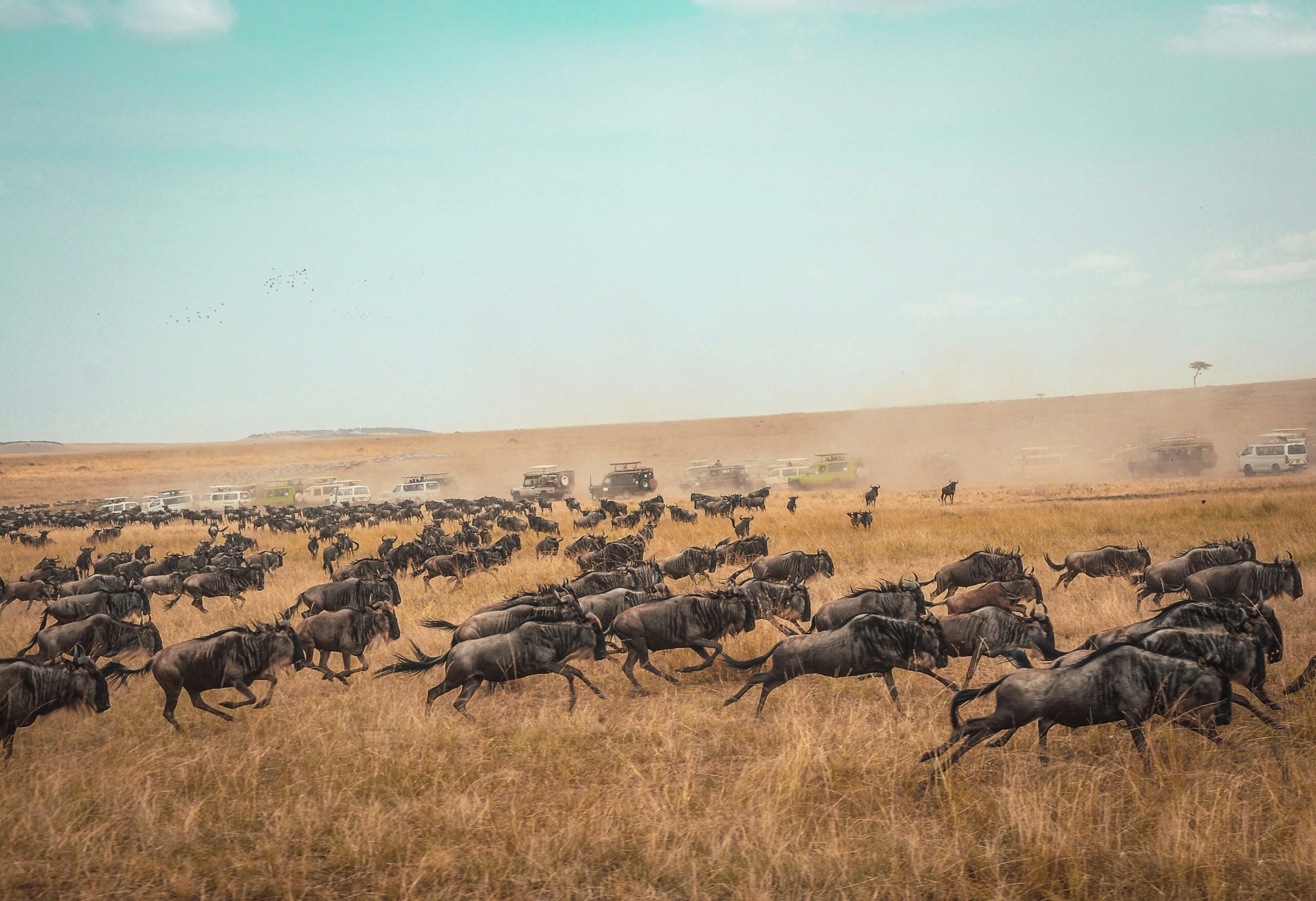
Wildlife also changes with the seasons. During the rainy months, the pans attract animals and migratory birds. Zebra and wildebeest can gather in large numbers when conditions are right. The park is remote, so getting there takes more effort than visiting Chobe or the Delta. That isolation is exactly why it works for travellers who want fewer vehicles and a more wilderness-focused safari.
Best reasons to add Nxai Pan:
- For landscapes: Baines’ Baobabs and huge open salt pans
- For wildlife: zebra, wildebeest, giraffe, elephant and predators
- For photography: sunrise and sunset around the baobabs
- For solitude: fewer visitors than Botswana’s better-known safari areas
10. Visit the Khama Rhino Sanctuary
Botswana’s wildlife experiences are not limited to large national parks. The Khama Rhino Sanctuary, near Serowe, offers a more focused experience built around one animal: the rhinoceros. The sanctuary was established to protect rhinos and provides an important conservation area for both black and white rhinos.
You can explore the sanctuary on guided game drives and, in some areas, walking experiences. Rhinos are the main attraction, but they are not the only animals here. Giraffes, zebras, wildebeest, ostriches and several antelope species also live within the reserve. Birdwatchers have plenty to look for around the pans and grasslands.
Conclusion
Botswana asks for more planning than almost any other safari country in Africa. Trying to fit all ten stops into one trip usually backfires. It stretches both budget and patience past the point of enjoying any of it. Pick three or four instead. Build pacing around the distances between them. Chobe, the Delta, and the Kalahari sit hours apart by bush plane. That single decision, made early, shapes the whole trip. It matters more than any single lodge choice ever will. For more planning guides like this one, browse our travel blog.