
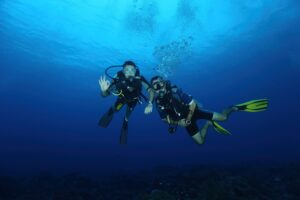
Scuba diving in Seychelles suits total beginners and logged veterans on the very same trip. Snorkelling works well too, but rarely in the same spot as the best dives. That single fact should shape how you plan this trip. Most guides lump diving and snorkelling together and call the whole island chain great for both. It is, in a loose sense. But the strongest scuba sites often sit past a boat ride most snorkelers skip entirely. The calmest snorkel bays rarely interest a diver chasing depth and current. Decide on your priority first. Then match it to an island, a season, and a boat schedule.
When to Go: Best Seasons for Diving and Snorkelling in Seychelles
Seychelles diving depends on matching your activity to the calendar, not the other way around. Two monsoon patterns run the show here. The northwest monsoon runs roughly November through April, bringing warmer air and calmer inner-island seas. Visibility often pushes past 30 meters in these months, sometimes closer to 40 near Praslin and La Digue. The southeast monsoon takes over from May through October. It cools the water by a few degrees and stirs up more current. That current pulls in nutrients, and bigger fish follow close behind. Whale sharks are the headline species divers hope to catch in this window.
September through November marks the strongest window for a whale shark sighting. A few show up as early as August in some years, though that’s the exception. Divers chasing that window should book boats for the shoulder months. Seas stay calm enough then to reach outer sites like Aldabra without a rough crossing. Snorkelers face a much simpler calendar. A shallow reef needs decent light and calm surface water, not a specific current pattern. Picture a family snorkelling off Baie Ternay in July. Their week looks nothing like a diver’s day on a boat bound for the outer atolls.
Book diving trips for April, May, October, or November if a calm crossing matters to your plans. Snorkelling works almost any month, since the shallow bays stay swimmable through both monsoons. For a 2026 trip, aim to lock shoulder-season dates early. Rooms near Beau Vallon fill fast once word gets out about a strong whale shark season.
Where to Dive: Mahé, Praslin and La Digue Compared
Mahé, Praslin, and La Digue are not interchangeable bases, even though every brochure treats them that way. Mahé holds the international airport and the largest cluster of dive schools. Most of them sit around Beau Vallon on the northwest coast. That convenience comes at a cost during peak season. Beau Vallon’s beach and dive boats both get crowded then. If your trip runs four days or fewer, base yourself on Mahé. Accept the crowds as the price of not wasting a travel day.
Praslin sits a short flight or longer ferry ride from Mahé, trading some site variety for quieter water. Aride Bank and Booby Island both sit within easy boat range. Neither gets the boat traffic that Beau Vallon sees in July. Praslin also holds the Vallée de Mai Nature Reserve, home to the rare coco de mer palm. That reserve gives non-diving days something worth doing beyond another beach. Divers with six to eight days on the ground should split their stay. Base part of the trip on Mahé and part on Praslin instead of picking just one.
La Digue runs differently again. No cars circle the island, so bicycles move most visitors between beaches, dive shops, and the ferry dock. Anse Source d’Argent draws crowds for the photos. South Marianne Island, off La Digue, offers some of the strongest drift diving in the inner islands. The tradeoff shows up when weather turns. A canceled ferry can strand a diver on La Digue for a day. Build slack into any itinerary that places La Digue near the end of a trip.
Here is the honest breakdown for a first Seychelles visit. Pick Mahé for convenience and a short trip. Praslin fits best if calmer, quieter water and one reserve visit matter more than site variety. La Digue works only if your days stay flexible, since ferry cancellations happen during the southeast monsoon.
- Mahé is best for short trips and easy access. Tradeoff: crowded dive boats in peak season.
- Praslin is best for quieter water and one reserve day. Tradeoff: an extra ferry or flight leg.
- La Digue is best for drift diving and beach photos. Tradeoff: ferry cancellations during rough weather.
Best Dive Sites for Scuba in Seychelles
Six sites carry the Seychelles reputation among serious divers. They do not all suit the same skill level, though. The Ennerdale wreck, an oil tanker broken apart northeast of Mahé, ranks as a true bucket-list dive. It also sits around 30 meters down with scattered, sometimes disorienting wreckage. Anyone without at least twenty logged dives should skip it for now.
Shark Bank, closer to Beau Vallon, suits a wider range of divers. Strong current pulls in reef sharks and big schools of fusiliers. The granite pinnacle itself sits shallow enough for an early intermediate diver to handle with a guide. Around L’ilot, a small granite island a short boat ride from Beau Vallon, the diving turns forgiving. Shallow arches and swim-throughs work well for a nervous Open Water diver on day one. Turtles show up on nearly every pass, too.
South Marianne Island, off La Digue, brings back the current and the difficulty. Drift diving here moves fast. Eagle rays and grey reef sharks cruise past divers holding a reef hook against the pull. Whale Rock, near Praslin, earns its name during whale shark season. It also holds eels, lionfish, and reef sharks year-round, regardless of season. Aldabra sits apart from everything else on this list. Reaching the atoll takes a multi-day journey by liveaboard or private charter. Diving there requires pre-approval from the Seychelles Islands Foundation before a boat can even head out.
- Ennerdale wreck (30m, advanced): eagle rays and dense coral growth on the hull
- Shark Bank (12-20m, intermediate): reef sharks and large schools of fusiliers
- L’ilot (8-15m, beginner-friendly): swim-throughs, turtles, forgiving current
- South Marianne Island (up to 25m, advanced): drift diving, eagle rays, grey reef sharks
- Whale Rock (15-25m, intermediate): year-round eels and reef sharks, seasonal whale sharks
- Aldabra (variable, advanced, pre-approval required): remote atoll reef systems
Best Snorkelling Spots in Seychelles (No Dive Certification Required)
The most photographed beach in Seychelles is not always the best place to snorkel. Anse Lazio and Anse Source d’Argent draw crowds for postcard shots. The sand looks almost too white to be real, and the shallows stay calm and turquoise. Fish life at both spots stays thin compared to what sits a short drive away.
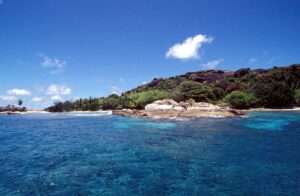
Baie Ternay Marine Park sits on Mahé’s northwest coast. The shallow reef there ranks among the strongest a snorkeler can reach without a boat charter. Hard and soft coral gardens sit close enough to shore for a weak swimmer to manage. The marine park status keeps fishing pressure low, so fish stick around in real numbers. Ile Cocos, off Praslin, works well for a mixed group of divers and snorkelers. The shallow, protected reef here gets used by both groups at once, without one crowding the other out.
Curieuse Island adds giant tortoises on land alongside decent snorkelling just offshore. That combination suits a family whose kids tire of the water after an hour. St. Pierre, near Praslin, brings the same granite boulder scenery divers see below 15 meters. The water here stays shallow enough to snorkel comfortably. Skip the crowds at the famous photo beaches for at least one day. Book a boat to one of these four spots instead.
- Baie Ternay Marine Park: protected reef, easy shore access, strong fish density
- Ile Cocos: shallow reef shared by divers and snorkelers, calm most days
- Curieuse Island: giant tortoises on land, decent reef just offshore
- St. Pierre: granite boulder scenery in shallow, snorkel-friendly water
Marine Life You’ll Actually See
Whale sharks get most of the marketing. But they are a seasonal, lucky-timing sighting, not a guarantee on any single trip. Hawksbill turtles show up on nearly every dive and most snorkels too. They glide along the reef edge without much concern for nearby swimmers. Reef sharks, mostly whitetip and the occasional blacktip, patrol the granite boulders around Mahé and Praslin. The numbers surprise most first-time visitors.
Eagle rays and the occasional manta pass through the drift sites off La Digue and Praslin. Sightings pick up between September and November, when current strengthens and pulls in bigger pelagic fish. Bumphead parrotfish move in schools around several inner-island wrecks. Their crunching on coral is loud enough to hear underwater. Why do so many guides lead with whale sharks? Turtles are the animal you will actually see every single time. Set that expectation early on. Come for the reliable sightings, and treat a whale shark encounter as the bonus it actually is.
- Common on nearly every dive: hawksbill turtles, reef sharks, bumphead parrotfish
- Seasonal, September through November: whale sharks, stronger eagle ray and manta activity
- Rare, worth the story if you see one: hammerhead sharks, dugongs
Beyond the Inner Islands: Alphonse, Desroches and Liveaboards
Yes, the Outer Islands deliver a step up in reef quality. Most first-time visitors do not need to go there, though. Alphonse, Desroches, and Astove sit hundreds of kilometers from Mahé, reachable only by private charter flight. A stay there costs several times what a Mahé-based trip runs. The reward matches the price. Wall dives drop into open water untouched by the fishing pressure inner-island reefs deal with. Dive boats out there often have entire sites to themselves.
A liveaboard offers a middle path between inner-island convenience and outer-island exclusivity. Several operators run multi-day trips covering sites from Mahé down through the Outer Islands. That lets divers hit far more locations than a land-based trip allows in the same number of days. The tradeoff is time on land. A liveaboard trades beach afternoons and topside exploring for extra dives. That setup suits a serious diver more than a mixed group with non-divers along.
Save Alphonse and Desroches for a second Seychelles trip. Cover the inner islands and their easier logistics first.
Seychelles vs. Maldives: Which Should You Choose?
Seychelles vs Maldives splits into two different kinds of reef, not two versions of the same trip. Maldives diving centers on atolls and channels, where strong currents and drift dives dominate the experience. Most resorts sit on their own private island with a house reef right off the beach. Seychelles diving happens mostly around granite boulders sitting close to shore. Currents stay milder at most inner-island sites, and reef access often skips the long boat ride.
That topography difference changes who each destination suits. A serious diver chasing big current and pelagic encounters will likely find the Maldives more thrilling. That holds true dive after dive. A mixed group fits Seychelles better. Some people dive, others want beaches, hiking, and topside variety, and Seychelles covers both. Cost runs high in both destinations. Seychelles resorts skew slightly less toward the one-island-one-resort model the Maldives is built on.
| Seychelles | Maldives | |
| Topography | Granite boulders, inner-island reefs | Coral atolls, channels |
| Current | Mostly mild, some drift sites | Strong, drift-focused |
| Best for | Mixed groups, first-time divers | Serious divers chasing pelagics |
| Topside activities | Hiking, nature reserves, town visits | Mostly resort-based |
Pick Seychelles if your travel group includes non-divers. Choose the Maldives if every person booking the trip plans to dive every single day.
Sailing Seychelles: Pairing a Charter with Your Dive Days
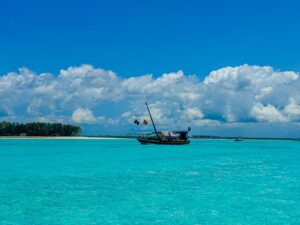
Sailing Seychelles solves a real problem. Moving between Mahé, Praslin, and La Digue by ferry alone eats into dive days. That’s especially true when a ferry gets canceled during rough weather. A day charter or short multi-day sail covers the same inter-island distance. It also adds beach stops, snorkel breaks, and sunset views a ferry schedule never allows.
This is not a liveaboard dive trip, and treating it as one leads to disappointment. A sailing charter usually carries snorkel gear rather than tanks. The pace suits a rest day between two dive-heavy days better than a full itinerary on its own. Several operators run day sails out of Mahé that stop at Sainte Anne Marine National Park. Snorkelling and a beach lunch fill the afternoon between harder dive days. Book one sailing day into a longer trip, ideally right after your most demanding dive.
Planning Your Trip: Costs, Certification and Booking
Costs for a Seychelles diving trip vary more than most guides admit. A realistic mid-range trip for two runs from around $1,600 for lodging and inter-island tours alone. That figure excludes flights, diving, and meals beyond breakfast. Certification matters here more than most first-time visitors expect. Snorkelling needs no certification at all, just a mask, fins, and a reasonable comfort level in open water. Diving does need an Open Water certification. A supervised Discover Scuba session works too, for a first try at depth with an instructor alongside you.
Also, a Tourism Environmental Sustainability Levy applies per person, per night, at most hotels. Budget a small daily amount on top of the room rate. Seychelles also requires an online travel authorization before arrival. Check current requirements close to your travel dates, since entry rules do shift.
Our 5 Nights, 6 Days Mahé Island package runs from $1,615 for two. It includes private airport transfers, daily breakfast, and full-day island-hopping tours covering Praslin and La Digue. Booking early matters quite a bit here. The package ties to a 90-day advance booking window. Lock dates in as soon as your travel window firms up. Reach out on WhatsApp or email us. We can build the diving and snorkelling days around whichever islands fit your trip best.
Conclusion
Pick your base island before you pick a resort. That single decision shapes every day of a Seychelles trip. It matters more than any single site or season ever will. Mahé suits a short trip. Praslin suits calm, clear water. La Digue suits drift diving and flexible days. Match your island to your priorities first, then build the rest of the itinerary around it. If the planning feels like too many moving pieces to coordinate alone, reach out. WhatsApp us or send a note to reservations@alikaadventures.com. Our team will map a route across the islands that fits how you want to dive.