

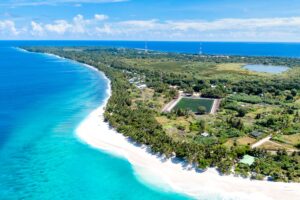
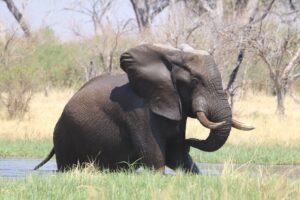
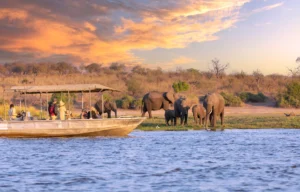
Kubu Island in Botswana is a granite outcrop that rises out of the Makgadikgadi salt pans. Most visitors reach it one of two ways. You either self-drive in with your own 4×4 and camp overnight, or join a guided Botswana safari instead. Both routes work, but they suit different travelers. This guide covers what the island is, the best months to visit, and how to get there. It also covers what a trip costs and what to do once you arrive. And it tells you what to pack before you go.
Most first-time visitors expect a small hill, and what they find is stranger and better than that. Why does a single rock formation pull travelers hundreds of kilometers off the main road? The scale of the emptiness around it is the answer.
Best Time to Visit Kubu Island
The best time to visit Kubu Island is the dry season, from May through October. But which month you pick still matters. Botswana’s rains turn the pans into thick, sticky mud, and the tracks close completely. From November through April, Kubu Island is simply out of reach. Once the dry season starts, the real choice shifts to which month suits your trip best.
June and July draw the biggest crowds. South African school holidays send families and overlanders out to the pans in numbers. Campsites fill up fast during these two months. September and October flip that pattern. Fewer people show up, but the heat climbs hard by midday. Walking the rocks at noon in October is not pleasant. Plan around the early morning and late afternoon instead.
May sits neatly in between the two. The mud has usually cleared, the crowds have not arrived yet, and the heat has not peaked.
- Early dry season (May-June): tracks recently reopened, fewer crowds
- Peak dry season (July-August): coolest temperatures, busiest campsites
- Late dry season (September-October): quiet, hot by midday, plan around the heat
How to Get to Kubu Island
The route from the south is a straight shot, but the route from the north is not. Reaching Kubu Island in Botswana always means driving on sand. A 4×4 is required either way, no exceptions.
From the south, the road runs from Mmatshumo village toward the island on a single, obvious track. It passes an old viewing tower and a vet fence gate along the way. Most drivers cover this route without getting lost.
The northern approach starts near Nata, off the main highway between Maun and Nata. From there, the sandy tracks fan out with almost no signage. Small trails branch off constantly, and some simply end in the bush. Getting turned around here happens to experienced drivers, not just first-timers.
Why does the direction you choose matter so much? Getting stuck on a wet pan with no phone signal is a real risk. That is not a scare tactic. If this is your first trip to the pans, take the southern route from Mmatshumo. Save the northern route for a return visit, once you already know the terrain.
- Southern route (via Mmatshumo): shorter, one clear track, best for first-timers
- Northern route (via Nata): longer, unmarked, better suited to drivers who already know the pans
Things to Do at Kubu Island
Budget one afternoon and one night here, since that is genuinely enough time. Most visitors arrive by mid-afternoon and walk the rock formations while the light is still soft. Then they settle in before sunset.
There are no marked trails on the island. You pick your own route among the boulders and baobabs, which is part of the appeal. Climb to one of the higher points before the sun drops. From there, the pan stretches flat in every direction, with nothing to break the horizon.
Once the sun is down, the sky takes over completely. Kubu Island sits far enough from city light that stars come out fully within the hour. A guided walk is worth booking if one is running when you visit. A local guide explains the rock formations and history in ways a self-guided walk cannot.
- Walk the granite outcrops and boulder fields at your own pace
- Watch the sunset from one of the higher rock points
- Stargaze once full dark sets in, with almost no light pollution
- Book a guided walk on site, if one is running that day
Where to Stay: Camping at Kubu Island
Kubu Island does not have a lodge, and that changes how you should plan this trip. Camping through the Gaing-O Community Trust is the only option on the island itself. It is basic by design, with drop toilets, no power, and no shop within reach.
You bring your own tent, food, water, and fuel. Basic gear can sometimes be rented on-site, if it is available. Campsite fees are usually charged per person, per night. Rates differ for local, regional, and international visitors. Exact figures shift often, so confirm current pricing directly with the Trust before you travel.
So what if camping and self-driving is not the trip you want? A guided Botswana safari can route through Kubu Island and the wider Makgadikgadi Pans. None of that logistics has to fall on you. We build these itineraries We handle the fuel, water, and camp gear, so you do not have to. WhatsApp us or email us to talk through dates that fit your trip.
- Drop toilets and no electricity, so bring a headlamp and backup power
- No shop nearby, so pack all food, water, and fuel before you arrive
- Firewood and basic gear sometimes available to rent on-site, but do not count on it
Kubu Island Safari Packages & Costs
We will not quote you a fixed Kubu Island package price here. We simply do not sell one as a stand-alone trip yet. Botswana runs on a high-cost, low-volume tourism model. That shapes every price you will see across the country.
As of 2026, multi-day Botswana safaris commonly run from roughly $2,800 to $9,000 or more per person. The exact number depends on camp tier and trip length. That range comes from established Botswana operators’ published pricing, not from Alika Adventures’ own rates. Fly-in camps near the Okavango Delta sit at the high end. Self-drive routes through the pans, like the one that reaches Kubu Island, sit well below that.
Why is that range so wide? A private plane transfer and a staffed camp cost far more than a self-drive route with basic camping.
We build custom Botswana itineraries at Alika Adventures. A Kubu Island stop can be priced into your route, not sold as a fixed package. Tell us your travel dates, group size, and camp style. We will put together a quote built around your trip. WhatsApp us or email us and we will get started.
What to Pack and Know Before You Go
Most people worry about the visa, but that is genuinely the easy part. As of 2026, US passport holders can enter Botswana visa-free for stays up to 90 days. No paperwork, no embassy visit, and no fee at the border.
The real prep work is logistics, not paperwork. Kubu Island has no phone signal for long stretches of the drive. If you get stuck, no one is calling for help until you flag someone down.
There are no shops or fuel stations anywhere near the island. Running low on water out here is not a minor inconvenience. Payment at the campsite is usually cash only. A missed ATM stop hours back can end your plans fast. Pack like the nearest shop is a full day’s drive away, because it often is.
- Enough fuel for the full round trip, plus a safety margin
- Enough water and food for longer than you plan to stay
- Cash in local currency, since cards are rarely accepted on-site
- A paper map or offline GPS, since phone signal disappears fast
- A basic first aid kit, since help is genuinely far away
Conclusion
Kubu Island is worth the drive, and getting there is really the only decision left to make. Self-drive and camp if you already know Botswana’s tracks and want that kind of trip. Or join a guided safari instead if you want the wildlife and logistics handled for you. Both routes end at the same baobabs and the same open sky. Ready to see it for yourself? WhatsApp us or email us at Alika Adventures, and we will help you plan the route.