
The Okavango Delta delivers the best safari in Botswana for most first-time visitors. Chobe National Park wins for elephant numbers. The Central Kalahari wins for raw solitude. That’s the honest answer, not a dodge. Botswana doesn’t have one best park. It has several, each built for a different kind of trip. A honeymoon couple wants something different from a serious photographer. A family with two weeks wants something different from someone squeezing in four days.
This guide breaks down each major Botswana park. It covers what each one actually costs, and how to pick the one that fits your trip.
What Makes a Botswana Safari Different
Camps here cap their guest numbers on purpose. Most run sixteen guests or fewer, sometimes less. That’s the real reason costs run higher than a trip to the Maasai Mara or Kruger.
Fewer guests means fewer vehicles at each sighting. You might watch a pride of lions alone for twenty minutes. No other trucks crowd the view. Private concessions surround many of the top parks. Guides there can drive off-road toward a sighting. Rangers in a public reserve simply can’t do that.
This isn’t a marketing line. It’s a licensing model the government built on purpose. Botswana chose low visitor numbers over mass tourism decades ago, trading volume for quality on every trip. The safari experience today still runs on that early choice.
Best Time for a Botswana Safari: Dry Season vs Green Season
The dry season isn’t simply the safest bet for every part of Botswana. It’s the safest bet for the north, not the whole country. From May through October, water levels in the Okavango Delta reach their highest point. Rain that fell months earlier in Angola finally arrives in the Delta’s channels during these dry months. New areas flood, and wildlife gets pulled toward whatever water remains. Animals cluster tighter as the land dries out, and sightings get easier by the week. This stretch counts as peak season for Chobe and the Delta. Prices climb fast to match the demand.
November through April flips the pattern entirely. Rain falls across the north, and grass grows tall within weeks. Newborn animals show up everywhere you look. Birdwatchers love this window, since migrant species arrive in huge numbers. Roads get harder to manage during the heaviest rains. A few camps close entirely for weeks at a time.
The Kalahari runs backward from all of this. High season there falls between November and April, exactly when the north goes quiet and cheap. Planning a Kalahari and Delta trip together? Check both calendars carefully before you lock in a single date.
| Season | Months | What You’ll See | Trade-Off |
| Dry (North) | May–Oct | Concentrated wildlife, easy sightings | Highest prices, busiest camps |
| Green (North) | Nov–Apr | Newborn animals, migrant birds | Rain, some roads and camps close |
| Kalahari high season | Nov–Apr | Zebra migration, green grass | Opposite of the northern peak |
| Kalahari low season | May–Oct | Quiet, cold nights, fewer visitors | Wildlife more spread out |
Okavango Delta: Best for Water-Based Safaris
The Okavango Delta is consistently ranked among the best places for safari in Botswana. The reasons hold up close to the ground. Water shapes almost everything here. Rain falling in the Angolan highlands travels hundreds of miles south. It arrives between April and August, turning dry channels into a maze of lagoons and islands.
That flood pulls wildlife in from every direction. Elephants wade between islands in loose lines. Lechwe antelope splash through shallow water while fish eagles watch from overhead. Predators follow the herds closely. Lion and leopard sightings stay strong all year, even as water levels shift through the seasons.
Three main ways exist to explore the Delta, and each suits a different kind of traveler.
- Mokoro (traditional canoe): Slow, quiet, and poled by hand. Best for photography and close wildlife views, since there’s no engine noise to scare off birds.
- Motorboat: Covers far more ground in the same amount of time. Works better with kids or a tight schedule.
- Game drive: Reaches drier ground away from the water. This is where lion and leopard sightings happen most.
Most Delta camps run as tented lodges, raised on decks above the floodplain. Many keep under fifteen tents total, which keeps things quiet even during peak season. Which option should you actually book? Match the activity to what matters most on your own trip, not to whatever photographs best online.
Chobe National Park: Best for Elephant Safaris
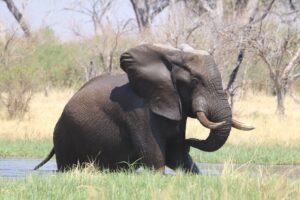
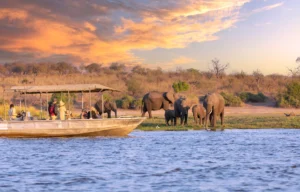
Most guides assume you need a full lodge stay to see Chobe properly. That assumption simply isn’t true. Chobe holds one of the largest elephant populations left on the continent. Tens of thousands move through the park during the dry months, when water elsewhere runs low. Long lines of elephants cross open floodplains toward the Chobe River. Sometimes fifty or more animals move together in a single herd. Boat cruises put you closer to this than a vehicle ever could. Elephants drink just meters from the boat.
Kasane sits right at the edge of the park. That single fact changes the math for anyone on a shorter budget. You can base yourself in town and book a half-day or full-day trip into Chobe. A single boat cruise often shows more wildlife per hour than a game drive does. Animals cluster along the river all through the dry season. Kasane also sits close enough to Victoria Falls that plenty of travelers combine both stops in one trip.
Staying inside the park costs more, but it buys you early morning and late evening drives. Those hours fall before and after the day-trip crowds arrive. Savuti, deep in the park’s interior, delivers a wilder, quieter version of Chobe. It suits anyone with the extra days and budget to reach it. Both approaches work well for different travelers. Pick day trips if your budget or timeline is tight. Pick a lodge stay instead if you want those quiet early hours.
Moremi Game Reserve: Best for Predator Sightings
Moremi is a public reserve. That single fact changes how a safari here actually feels. Vehicles must stay on marked tracks inside Moremi’s borders. Guides in the private concessions bordering it can drive off-road toward a sighting instead. That restriction sounds like a downside, but it comes with a real trade-off worth knowing. Public access means lower rates than the concessions next door. The reserve still holds some of the strongest predator numbers in the entire Delta system.
Leopards move through Moremi’s mopane woodland in real numbers. Wild dog packs den here most years during denning season. Lion prides work the open plains near Third Bridge, one of the reserve’s best-known crossing points. Game drives run morning and afternoon along a shared track network. A strong sighting can draw a small crowd of other vehicles fairly fast.
Anyone chasing predator sightings on a tighter budget should look at Moremi first. It delivers real big-cat encounters without the private-concession price tag attached.
Central Kalahari Game Reserve: Best for Desert Solitude
The Central Kalahari suits travelers who want to be genuinely alone. This isn’t the park for a Big Five checklist. Vast, flat, and largely empty, the reserve covers more ground than several small countries combined. San guides lead walks here, tracking animals across sand and scrub the way their families have for generations. They read footprints and broken grass the rest of us would walk straight past without noticing.
Wildlife spreads thin across this much space, so sightings take real patience. Black-maned lions hold territory around the pans. Brown hyena, a rare and shy species, den in the quieter corners of the reserve. Springbok and oryx handle the heat better than almost anything else on the continent. Both species evolved for exactly this kind of dry, open country.
Nights in the Kalahari run properly dark, with no light pollution for hundreds of miles in any direction. Anyone chasing star photography or genuine solitude should put this reserve near the top of the list. It beats the busier northern parks on both counts.
Makgadikgadi Pans: Best for the Zebra Migration
Zebra move through Makgadikgadi in numbers that rival East Africa’s more famous migrations. Botswana’s own version runs from around January through March. That’s when the pans fill with shallow water and grass spreads fast across the salt flats.
These pans are the dried remains of an ancient super-lake that once covered much of the country. Today they stretch flat and white to the horizon, broken only by centuries-old baobab trees standing alone. Meerkats at a few specific camps grow used to visitors fast. They’ll climb onto your shoulder or camera bag looking for a better vantage point.
Outside migration season, the pans still deliver something few other parks can. Quad bikes and sleep-out platforms let you camp directly on the salt flats under an open sky. Nothing but stars keeps you company out there. Time your trip around the January to March window if the migration itself is the priority.
Which Park Has the Best Safari in Botswana for You?
Reading four separate park descriptions and comparing them yourself takes real effort. Doing that comparison for you is the actual point of this section.
Why match the park to the traveler instead of chasing one single “best” answer? Every Botswana safari park does one thing brilliantly and skips the rest. Knowing which trade-off you’re making up front saves real money and real disappointment later.
| Traveler Type | Best Park | Why |
| First safari, limited time | Chobe National Park | Easy access, dense elephant sightings, day trips available |
| Serious photography | Okavango Delta | Mokoro access, water reflections, strong predator density |
| Tight budget | Moremi Game Reserve | Public reserve pricing, strong predator sightings |
| Honeymoon or anniversary | Okavango Delta (private concession) | Small camps, water-based privacy, high-end lodges |
| Genuine solitude | Central Kalahari Game Reserve | Lowest visitor density in the country |
None of these picks are close calls once you know what actually matters to you. A first-time visitor with five days shouldn’t try to squeeze in the Kalahari. A photographer chasing water reflections shouldn’t trade the Delta for Chobe’s convenience. Start with what you want most from the trip. Let that answer point you toward the park.
How Much Does a Botswana Safari Cost in 2026
A Botswana safari typically runs between $200 and $1,150 per person per day. That figure comes from safari industry pricing data. That’s a wide range, and a few specific factors explain most of the gap.
Camp size drives most of the difference. A budget camping safari puts you in a shared tent with a group, often self-catering some meals. Daily costs sit near the bottom of that range. A mid-range lodge safari adds private tents, cooked meals, and shared game drives. That combination usually lands somewhere in the middle. A luxury fly-in safari adds light-aircraft transfers, private guides, and small camps capped at a handful of tents. That combination pushes costs toward the top.
Run the math over a real trip, and the numbers get much clearer.
| Trip Style | Per-Day Range | 7-Night Estimate (pp) |
| Budget camping | $200–$350 | $1,400–$2,450 |
| Mid-range lodge | $400–$700 | $2,800–$4,900 |
| Luxury fly-in | $800–$1,150+ | $5,600–$8,050+ |
These figures come from general Botswana market data, not a fixed Alika Adventures package. Every trip we build gets priced around your actual dates and camp choices instead. Aircraft transfers between camps drive most of that gap. Food and park fees barely move the number.
In 2026, expect rates near the top of these ranges during the July through October peak season. Pricing softens noticeably across the green season months instead. We can quote a real number once we know your travel dates and group size.
Tell us which parks you want to combine too. Message us on WhatsApp. We’ll build a specific quote around your trip instead of handing you a generic range.
Fly-In Safari vs Self-Drive: Which Should You Choose
Money or time, pick one. That’s the real trade-off between flying and driving yourself around Botswana. Self-drive safaris need a proper 4×4, not a rented sedan. Long stretches of road turn to deep sand or thick mud depending on the season. Some routes run for hours between fuel stops. Camping safaris carry their own water, food, and fuel between stops. That self-sufficiency is part of the appeal for travelers who want real immersion, not just a cheaper trip. Advance planning matters a lot here. Permits and campsite bookings need sorting weeks ahead, not the night before.
Fly-in safaris trade money for simplicity instead. Light aircraft connect camps in journeys that usually run under an hour. What would be a two-week driving puzzle becomes a handful of short hops. You skip the sand, the fuel stops, and the navigation entirely. This costs more per day. It also frees up time you’d otherwise spend driving instead of watching wildlife. A similar trade-off shapes a Kenya vs Tanzania safari choice, where distance between parks often decides the plan.
- Self-drive suits: budget-focused travelers, experienced 4×4 drivers, anyone who wants full control over the itinerary.
- Fly-in suits: shorter trips, first-time visitors to Africa, anyone prioritizing time over cost.
Neither option beats the other outright. It’s a genuine trade between money saved and time gained. The right call depends entirely on what your trip actually needs.
Building Your Botswana Safari Package with Alika Adventures
We don’t run a fixed Botswana package menu today. Every trip we build gets shaped around your dates and budget. The parks that matter most to you decide the rest. That’s a deliberate choice, not a placeholder. A honeymoon trip built around the Okavango Delta needs different camps than a budget-focused Chobe and Moremi combination. Pricing them the same way would shortchange one traveler or overcharge the other. If you want a broader look at preparing for a safari trip, that guide covers the basics first. We’d rather quote your specific trip than sell you a package that doesn’t fit.
Send us three things to get started:
- Your travel dates, or a rough window if plans aren’t fixed yet
- Group size and what matters most to you, whether that’s photography, budget, or a honeymoon
- A rough budget range per person, so we can match camps to what you actually want to spend
Message us on WhatsApp or email us. This works whether you’re planning a 2026 trip or already looking ahead to 2027. We’ll turn those three details into a real, priced itinerary within a couple of days.
Conclusion
Botswana doesn’t hand out one universal answer. The best safari in Botswana is the one matched to what you actually want. It’s never simply the park that wins every list. Chobe suits a short, elephant-focused trip. The Delta suits photography and honeymoons. The Kalahari suits genuine solitude. Match your priorities to the park first, then build the logistics and budget around that choice. Get that order right, and the rest of the planning falls into place fast.